Relationship between LLMs and YouTube
One of the first things you have to understand about YouTube as an LLM visibility source is that not all LLMs are created equal.
OtterlyAI analyzed more than +100 million AI citation instances over a 30-day period to understand what drives visibility in AI Search. Of all citations observed, 5.54% came from social media and video platforms. Within that subset, YouTube represented 31.8% of social media citations*, 1.8% of all citations. But each LLM acted quite differently.
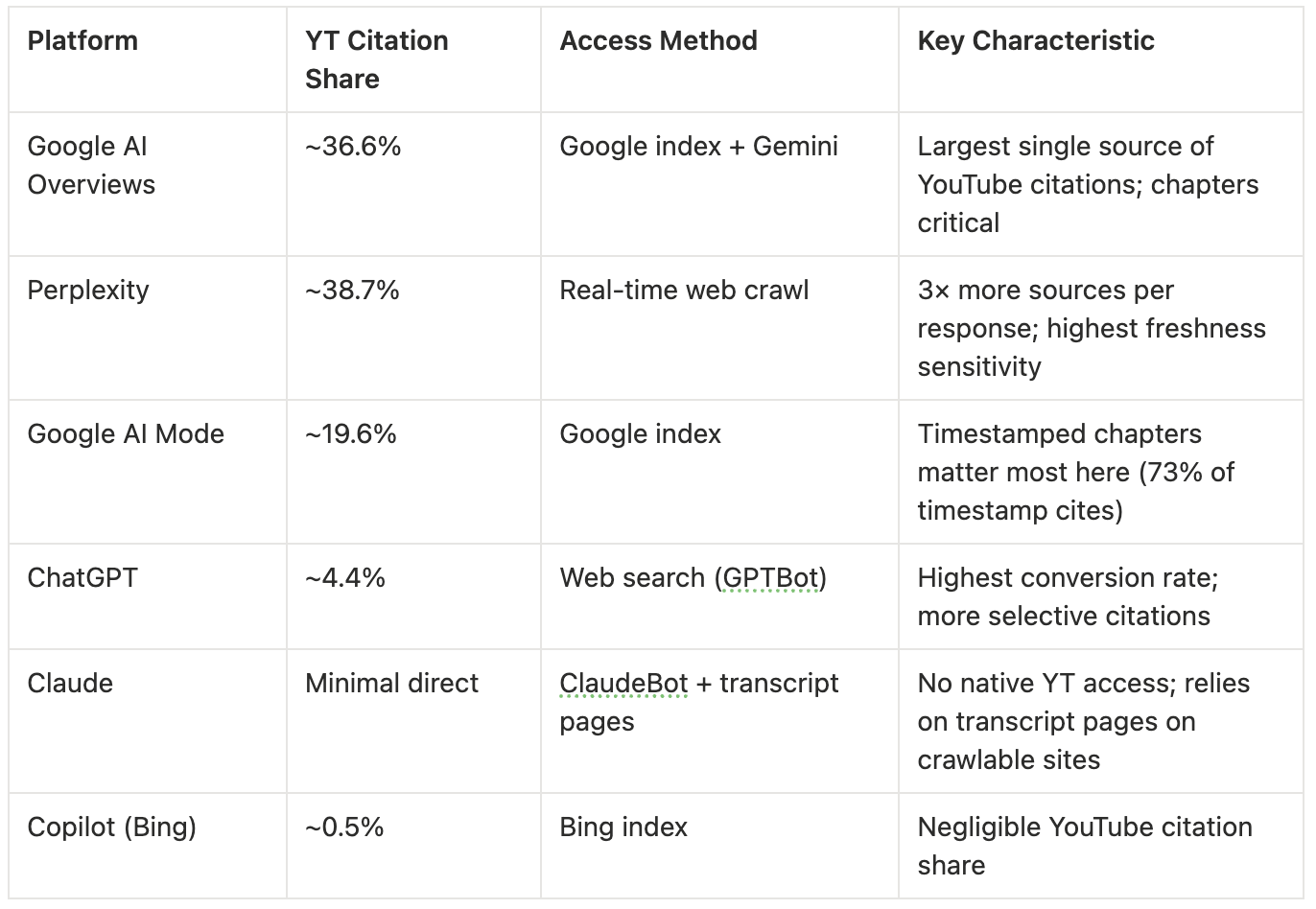
Perplexity came in the lead with 38.7% of YouTube citations through real-time web crawling, followed by Google AI overviews at 36.6%.
Here is a quick breakdown of how LLMs refer to YouTube videos in their answers:
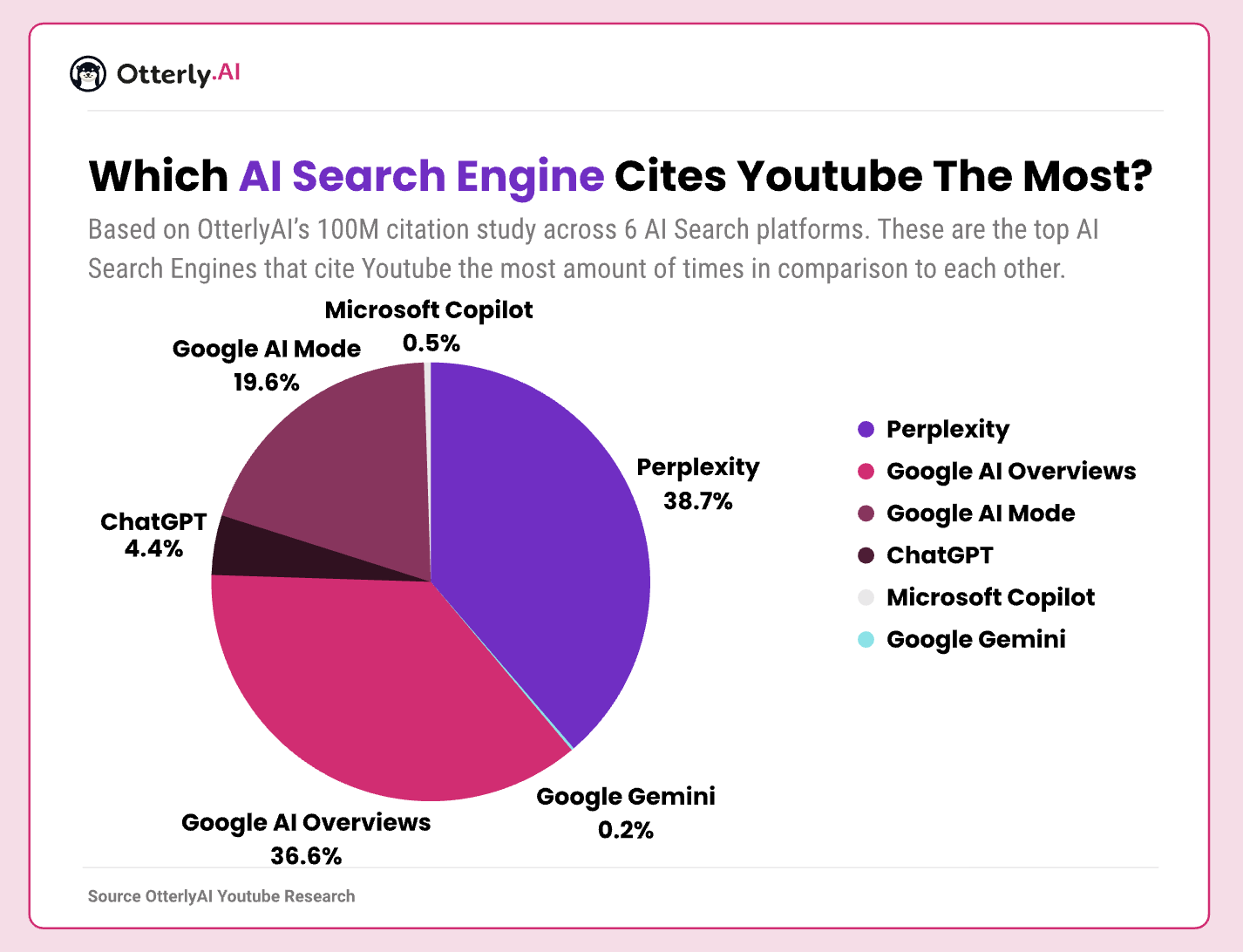
Source: The YouTube Citation Study 2026 by Otterly* https://otterly.ai/blog/youtube-ai-citation-study-2026/
Google, since it owns YouTube, has direct access to all YouTube videos and all their metadata. It can see transcripts of all videos, their titles, descriptions and already knows how popular they are.
Whereas it is not possible for other LLMs to have access to this information. Perplexity reportedly have been scraping Youtube data, to the chagrin of Google. Using bulk YouTube transcripts to train independent models generally violates YouTube's Terms of Service. But I believe it is a grey zone to use YouTube as a source of truth by LLMs.
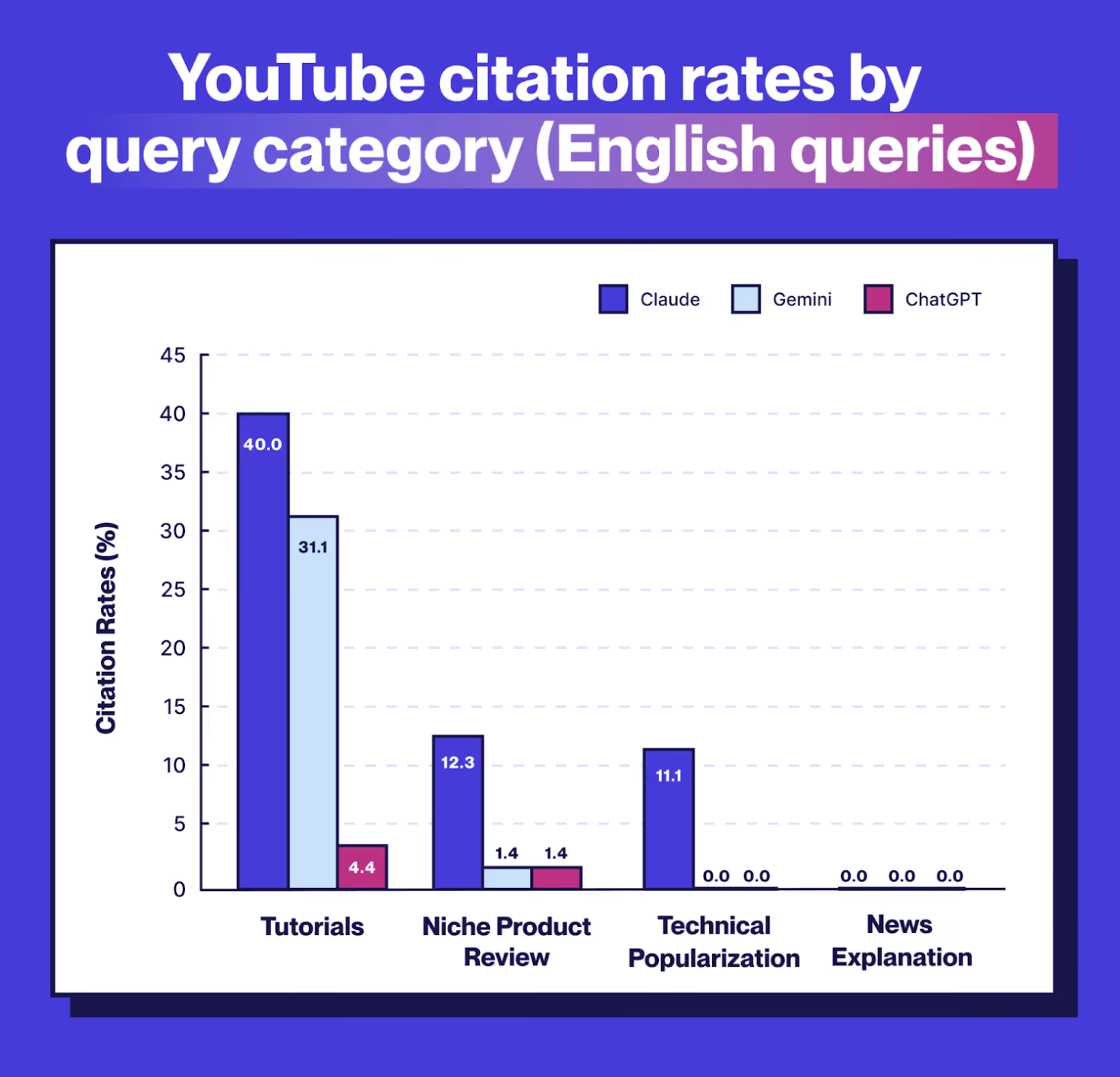
Another research done by WEGLOT in June 2026 (https://www.weglot.com/blog/does-googles-ai-favor-youtube) with the setup of 60 distinct queries covering four categories: Tutorials, Niche Product Reviews, Technical Popularization, and News Explanation found that YouTube is genuinely a dominant resource for how-to content, and remains the go-to platform for it.
And even when YouTube is not used as a direct source to build an answer, it is used by Claude and Gemini as a further reading resource. Based on this research, both for Claude and Gemini, YouTube remains as one of the main sources.
These studies are helpful to get a glimpse into how different LLMs interact with YouTube but the truth of the matter is these balances are changing constantly. It is easy to get lost in the weeds of researching which platform cites YouTube the most and which LLM to optimize for. The underlying fact remains, YouTube, just like reddit is a source relied on by most tech-savy internet users to learn, to reference, to understand.
As long as these platforms stay popular, they will be included in the decision making process one way or another. All the popularity research conclude with similar advice; “YouTube remains a high-value platform for AI visibility”, “YouTube citations from AI models are a real channel worth investing in”